What Is a Meeting Sacrifice Score? The Metric Your Global Team Needs
Discover how sacrifice scores quantify the true cost of meetings across time zones and why this metric matters for team retention, morale, and global equity.
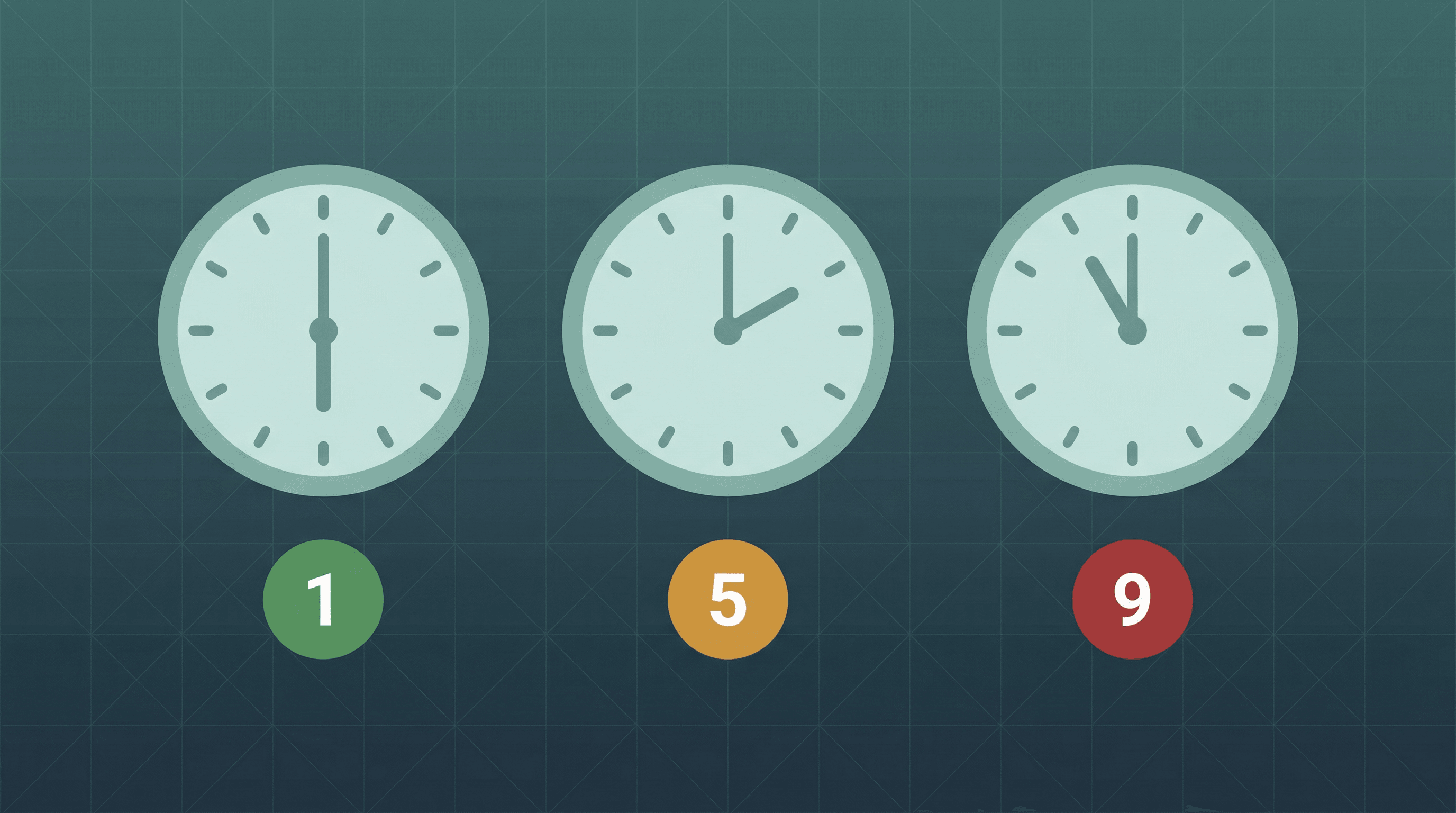
The Problem: Hidden Costs in Global Meetings
When your team spans multiple time zones, every meeting time is a compromise. Someone is always paying a hidden cost — whether it's a 6 AM start for your San Francisco team, a 10 PM slot for Tokyo, or an awkward 2 PM meeting that disrupts deep work for everyone in Europe. For years, organizations scheduled across time zones using a simple heuristic: what time works for the person in charge? This approach maximizes convenience for leadership while systematically punishing everyone else.
The real problem isn't just inconvenience. When team members consistently attend meetings at unnatural hours, the effects compound. Sleep disruption leads to health issues. Energy crashes reduce meeting quality. Good ideas go unsaid because people are exhausted. Talented employees in hard-hit time zones quietly begin job hunting. The true cost of a 7 AM meeting for your entire San Francisco team isn't just lost sleep — it's reduced productivity for the next day, increased stress hormones, and reduced engagement with the company mission.
Yet most organizations have no way to quantify this cost. They can't compare whether a 7 AM call for the West Coast is genuinely worse than an 11 PM call for Asia. There's no shared language to discuss whether a 30-minute status update is worth the pain, or if it should be async instead. This is where sacrifice scores come in.
What Is a Sacrifice Score?
A sacrifice score is a single number (typically 1-10 points) that quantifies how painful a meeting time is for a given participant. It captures the physiological and practical cost of meeting at that hour: how disrupted is their sleep? How far from their peak energy? How socially isolating is the time? The metric transforms an intangible, invisible problem into something concrete, comparable, and actionable.
The sacrifice score uses a "pain weight" algorithm based on circadian science. Golden hours — typically 10 AM to 4 PM in a person's local time zone — receive the lowest score (1-2 points). These hours align with peak energy, focus, and alertness. As you move away from golden hours, the cost increases. Morning meetings at 7-10 AM incur 3-5 points due to early wake time. Late afternoon slots (4-7 PM) add 2-4 points. But the true pain zones are the graveyard hours (11 PM to 7 AM), which spike to 8-10 points because they involve either severe sleep disruption or meeting at the worst possible time for human biology.
The algorithm also accounts for meeting duration. A 30-minute meeting in the graveyard is painful; a 2-hour meeting is brutal. Recurring meetings get multiplied because the pain compounds — the difference between a one-time midnight call and a weekly recurring commitment is enormous. Organizers get a slight discount (0.8x multiplier) because they chose the time and had advance notice. A mid-size distributed organization might discover that what they thought was a routine weekly all-hands meeting actually costs their Tokyo team 45 points per quarter. That's a quantifiable problem that can be addressed.
Why This Metric Matters for Team Health
When you make sacrifice visible, decision-making changes. A manager who sees "this all-hands meeting costs Tokyo 30 points" makes a different choice than one who just thinks "well, someone has to take the inconvenient slot." Transparency creates accountability. It also creates empathy. Engineers in your San Francisco office probably have no idea that their 9 AM standup is costing your Singapore team 24 points for the week. Once they see the number, they understand the actual human cost and become advocates for rotating meeting times or going async.
From a retention perspective, sacrifice scores matter enormously. Exit interviews from distributed teams consistently show the same pattern: "I was always the one in the bad time zone." Employees who feel like their time and health are being systematically devalued lose commitment to the organization. They stop participating fully in meetings. They eventually leave. By contrast, teams that track and minimize sacrifice scores report dramatically higher retention, better meeting engagement, and higher reported quality of life. These aren't soft benefits — they directly impact business continuity and hiring costs.
Sacrifice scores also enable better decision-making about which meetings are actually necessary. If a weekly status update costs your global team 150 combined sacrifice points, your leadership team can ask: "Is this information worth 150 points, or should this be a written update?" This forces the organization to make genuine trade-offs instead of defaulting to "meetings are free." For many organizations, tracking sacrifice scores actually results in fewer, higher-quality meetings.
How to Use Sacrifice Scores in Practice
The first step is measurement. Before you can improve, you need visibility. Many organizations now use scheduling tools that automatically calculate sacrifice scores for proposed meeting times. When you're setting up a recurring meeting, the tool shows you the total sacrifice cost for each time slot. A 10 AM Pacific time might show as 180 total points for a 10-person team. A 5 PM Pacific (which is 9 AM Tokyo) might show as 45 points. Suddenly the trade-off is clear, and you can make a deliberate choice based on actual data rather than convenience.
The second step is rotation. For recurring meetings, minimizing sacrifice doesn't necessarily mean finding a perfect time (it usually doesn't exist). Instead, it means rotating so that the pain is distributed fairly. Your all-hands meeting might rotate between 8 AM Pacific and 5 PM Pacific on a weekly basis. Yes, everyone has some pain either way — but no single geography is always the victim. Over a quarter, the sacrifice is balanced. This approach shows respect and builds trust across distributed teams.
The third step is using sacrifice scores to decide which meetings should be synchronous at all. If you calculate that an update meeting would cost your team 200 sacrifice points, you have evidence that it should probably be a Loom video shared asynchronously instead. Teams that integrate sacrifice scoring into their meeting culture report 30-40% fewer synchronous meetings, better meeting quality, and improved team morale. The metric transforms meetings from something that "just happens" into deliberate, justified decisions.
Sacrifice Scores and Organizational Justice
There's a deeper principle at work here: organizational justice. When some team members consistently attend meetings at terrible times while others always get convenient slots, there's an implicit message about whose time is valued. This creates resentment, reduces psychological safety, and contributes to quiet resignation. Over time, it pushes people out.
Sacrifice scores make this dynamic visible and actionable. They provide a shared language for discussing fairness. Instead of one team arguing "our time zone always gets shortchanged," you can say "our team absorbed 1,200 sacrifice points last quarter; your team absorbed 400." This transparency enables real conversations about equity. Some organizations choose to minimize total sacrifice (the greatest good approach). Others ensure that no single geography absorbs more than X points per period (the egalitarian approach). Regardless of which philosophy you adopt, the metric enables intentional decision-making rather than unconscious bias.
For leadership, sacrifice scores also serve as an early warning system. If you notice that your best performer in Singapore just started saying "I might need to find a role in a timezone-local company," you can look at the data. You'll probably discover they absorbed 300 sacrifice points over the last quarter while the rest of the team absorbed 100. The metric gives you concrete evidence of the problem and concrete ways to fix it — often before you lose the person.
Sources and further reading
Related Articles
Ready to schedule meetings fairly?
Try ClockAlign free — see sacrifice scores, find golden windows, and build a more equitable meeting culture.
Get Started Free